



Seconds to Act:?Building the Nation’s Integrated Shield


Today’s battlefield is no longer a place of linear progression.?
The threat landscape is defined by autonomous systems, multi-axis attacks and hypersonic glide vehicles that move?at?speeds of Mach-5?or faster. In this environment, the greatest challenge?isn’t?just building a better interceptor,?it’s?connecting sensors,?shooters?and command nodes quick enough to act.
Lockheed Martin is meeting this urgent need by weaving a seamless, layered fabric of defense tools across all domains?—?space, air,?land?and sea. This?strategic?effort?merges?these?systems into a single, integrated?shield that outpaces the speed of the threat.
“美诱直播 don’t just build individual platforms, we?help?orchestrate an?integrated air-and-missile-defense (IAMD)?architecture?from Space to Seabed,?built to protect today, while outpacing the threats of tomorrow,” said?Paul Pfahler, Sr. Manager for Strategy and Business Development.?
Higher Ground
Forming the shield begins in the stars.?Our?missile warning and tracking?systems?–?Space?Based-Infrared System (SBIRS),?Transport and Tracking Layer?vehicles and soon,?Next Generation Overhead Persistent Infrared Geosynchronous Earth Orbit (Next-Gen OPIR GEO) satellites –?operate across?multiple orbits?beyond?Earth’s?atmosphere,?serving?as an always-on watchtower.?
Leveraging generations of experience in?wide field of view constellations, Lockheed Martin provides continuous early-launch detection?and real-time tracking. This data, brought down from space itself, is streamlined to networks on the ground, ensuring that the kill-chain begins the moment a threat is detected.?
That persistent awareness converges on the?defensive?layer, where the?Next Generation Interceptor (NGI)?sits as the backbone of the nation’s homeland defense architecture. Designed to counter long-range ballistic missile threats, NGI pairs advanced discrimination capabilities with increased reliability and an adaptive nature, enabling it to engage targets with?greater precision and?confidence.?

?
The Flying Sensor
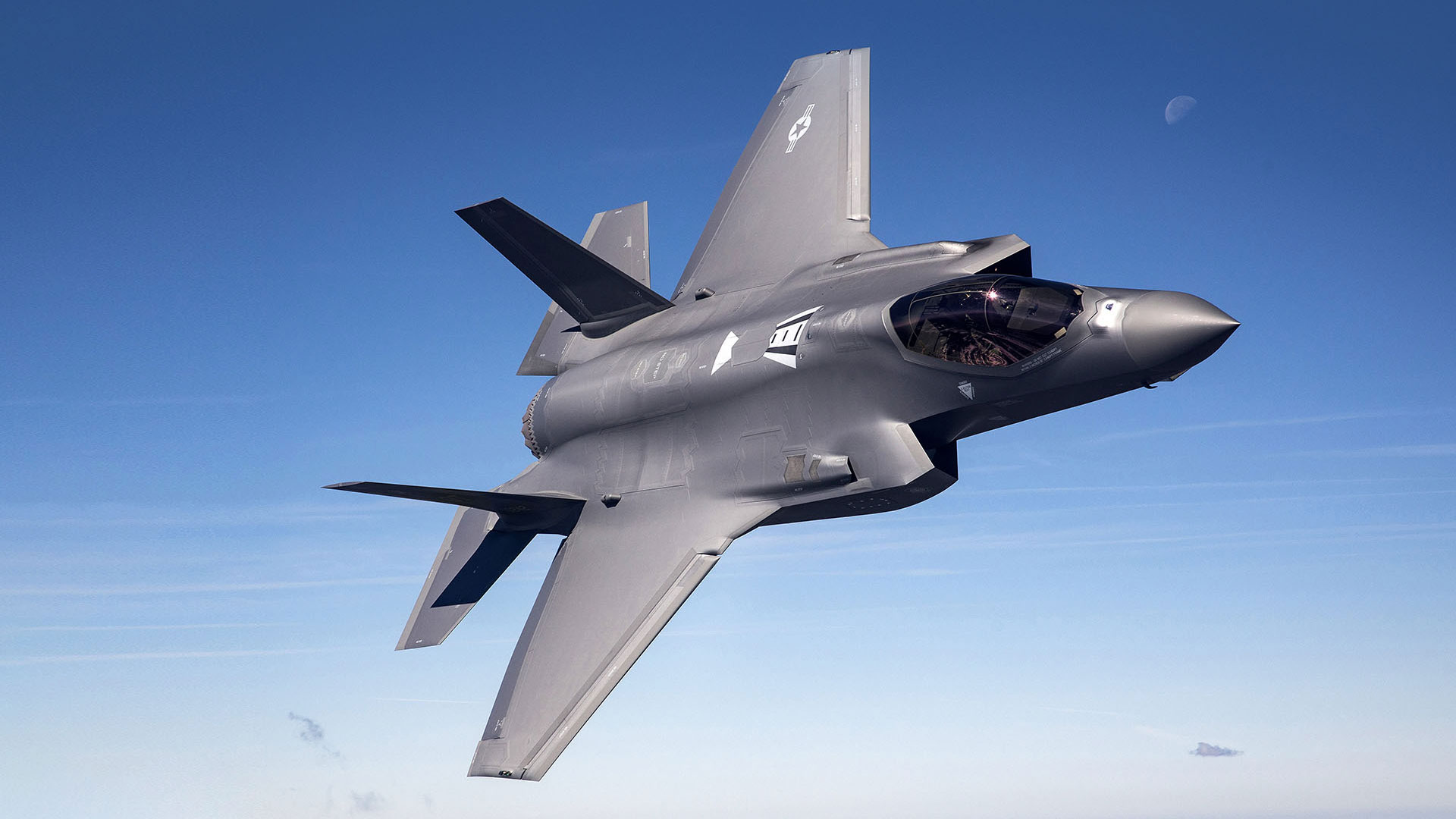
Amidst the clouds, Lockheed?Martin’s?F-35 Lightning II?does more than dominate the skies.?Serving as a sophisticated mobile ISR platform, its Distributed Aperture System (DAS),?Electro-Optical Targeting System (EOTS)?and advanced data fusion software turn every cockpit into a command center.?
By combining Space-sourced cues with its own onboard detection, the F-35 bridges the gap between strategic awareness and tactical strike at “lightning” pace.?

?
Quiet Precision
Not all sensors need to shout.?
Technologies like?IRST21??and?TacIRST?provide high-resolution infrared tracking without emitting detectable signatures.?
These passive sensors allow operators to discriminate targets in highly?contested domains?and radar-denied environments.?Fused with fire control solutions, passive sensing shortens the loop of “detect, track, engage,” proving that in modern defense, silent awareness can be as decisive as interception.?
Orchestrating the Response
The cornerstone of the integrated shield lies within Lockheed Martin’s?Multi-Domain Radar-Ready?and?advanced?Battle Management Command and Control?capabilities. Think of it as a “system of systems.”
These platforms create a joint operational picture across services and allied forces by aggregating sensor streams, prioritizing threats and?circulating actionable?cues.?AI?analytics?are?added to create a hierarchy of threats, allowing operators to turn information into decisions at the speed of conflict.

?
Building the Shield
The true power of an integrated shield is?synergy. It is no longer enough for systems to work in?isolation, because?the shield is only as strong as the speed at which its assets communicate.?
When a threat occurs, the sequence happens in an instant:?
Space-based sensors?identify?the launch, and provide a cue?
The F-35 receives the data, using stealth and advanced optics to track the threat
Passive sensor?systems?like?IRST21?silently lock on, providing precision without alerting any adversaries
Advanced Battle Management Command and Control capabilities?orchestrate the entire flow, selecting the best course to engage?and?eliminate?the threat?with?advanced?hit to kill interceptors like the?PAC-3 MSE?and?THAAD.?
From a satellite’s first blink to?intercepting an enemy threat, Lockheed Martin has engaged and unified command into a cohesive system to protect the homeland.??